
Makri Island
A private, uninhabited Greek island in the Ionian Sea — one of Europe's most remarkable and unusual real-estate opportunities.
The Island
A largely untouched corner of the Ionian Sea
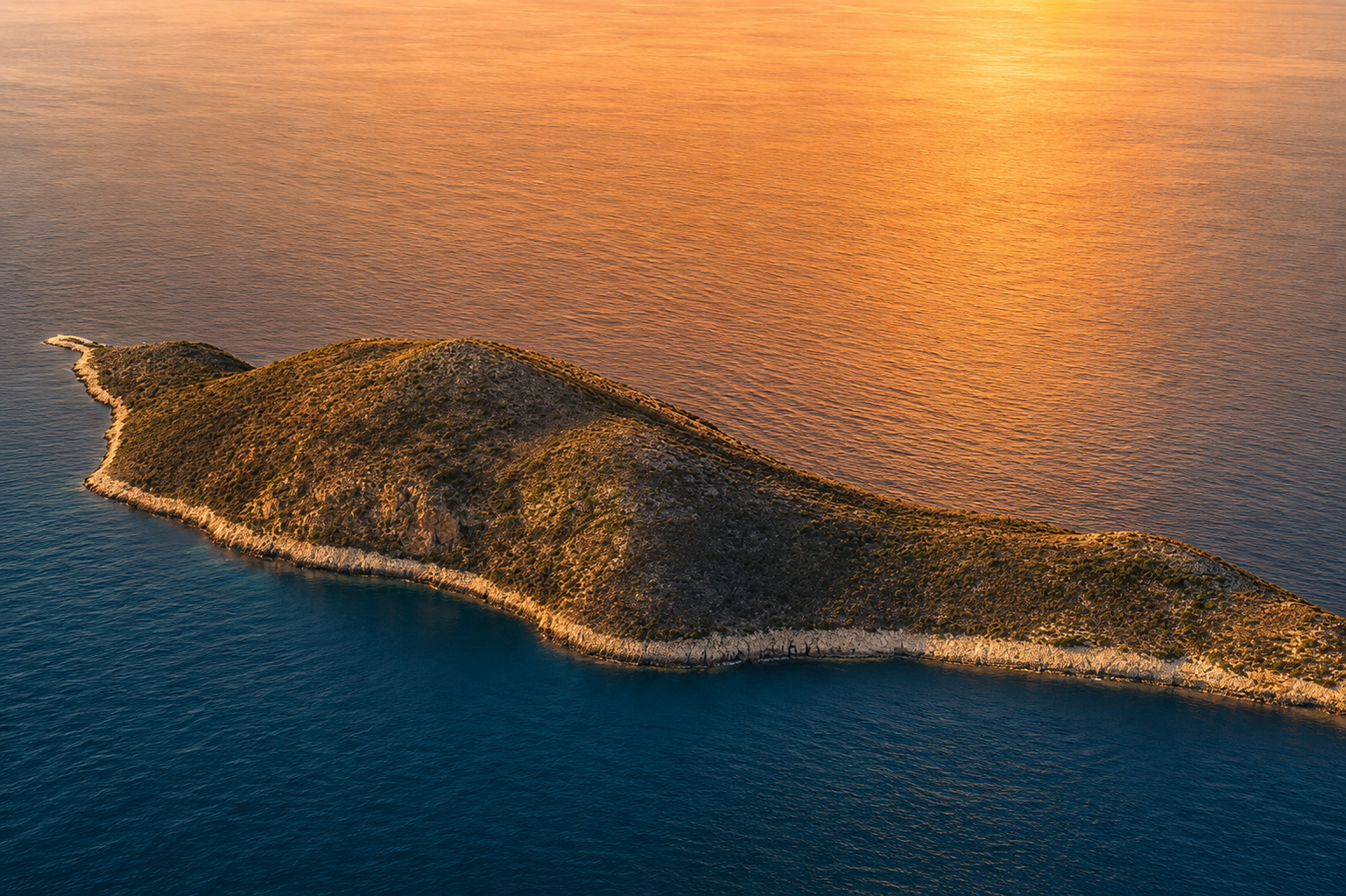
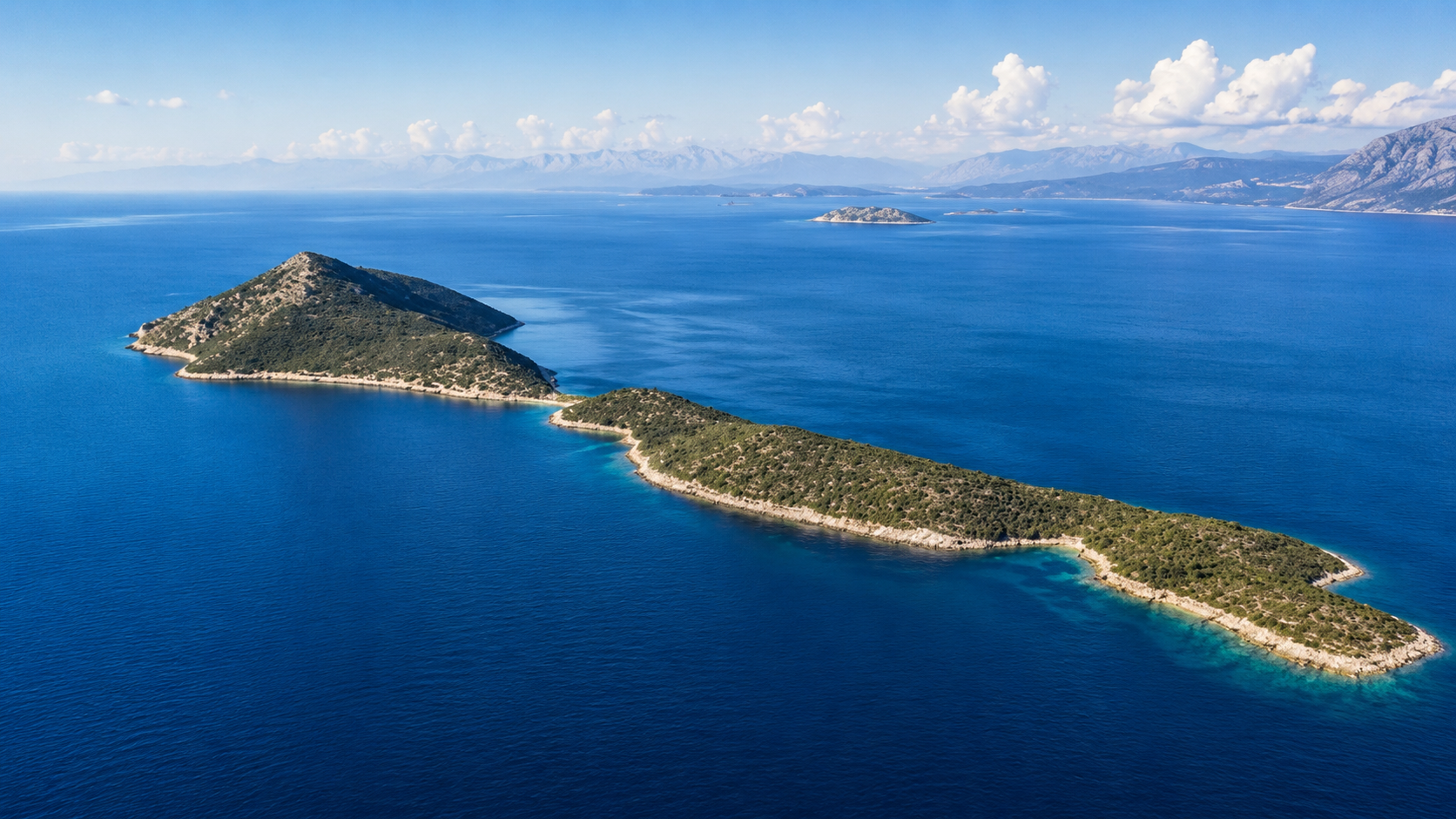
Makri is a small private island in the Ionian Sea, part of the Echinades archipelago off the western coast of Greece. Uninhabited and largely untouched, it lies roughly 30 kilometres east of Kefalonia, near the mouth of the Acheloos River, in one of Greece's most ecologically sensitive coastal regions.
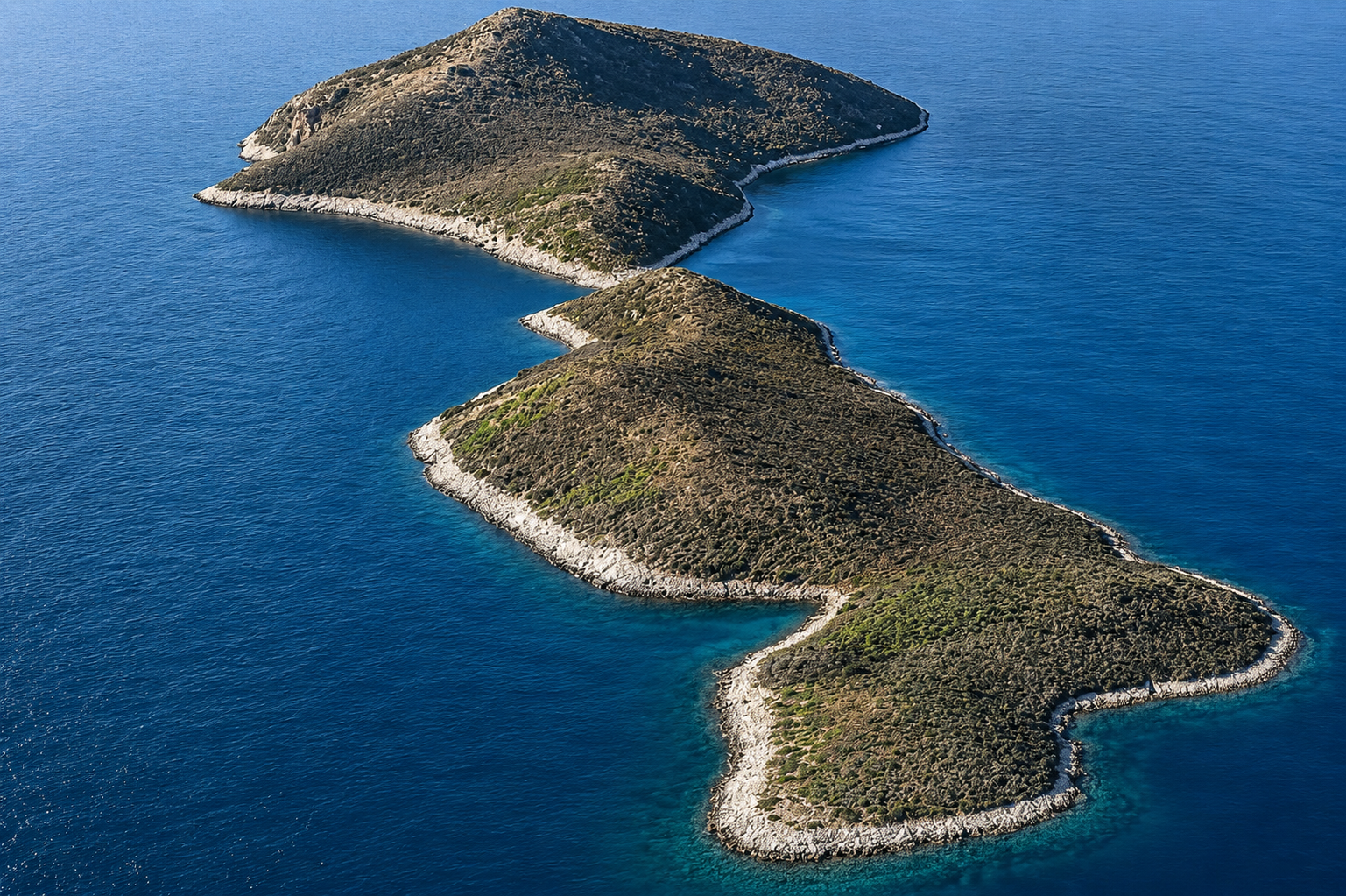
Covering approximately 0.98 km² (around 243 acres), Makri features rugged hills, forested terrain, over seven kilometres of coastline, and panoramic views across the Ionian Sea. Despite its idyllic appearance, the island remains undeveloped and inaccessible to mainstream tourism.
The Auction
A dramatic collapse in valuation
Original Asking Price
~€8,000,000
Current Starting Bid
€247,000
Makri has recently attracted international attention after its auction starting price collapsed from around €8 million to just €247,000 — a dramatic fall that has sparked intense debate about private island ownership, environmental restrictions, and the hidden complexities of Mediterranean real estate.
The island was acquired privately in the early 1990s and later promoted as a potential luxury development site, with proposals involving villas and tourism infrastructure. Those ambitions stalled due to severe legal and environmental constraints. The property is also entangled in mortgages, tax claims, disputed leases, creditor actions, and longstanding legal disputes involving the Greek state.
Although auction notices describe the island as private land, development would likely require extensive environmental approvals and potentially even a Presidential Decree under Greek planning law.
History
From Homeric legend to modern controversy
Historically, Makri has been associated with Homeric Greece. The broader Echinades island group has been known since antiquity and was strategically important in both classical and Venetian times.
Today, Makri has become emblematic of a broader reality surrounding private islands in Greece: while often marketed internationally as ultra-luxury assets, ownership and development can be extraordinarily difficult in practice. A 2014 Wall Street Journal feature on buying Greek islands noted that foreign buyers frequently underestimate the complexity of Greek zoning law, coastline protection rules, archaeological oversight, and environmental regulation.
The island continues to fascinate investors, journalists, and internet audiences precisely because of this contradiction — combining the fantasy of owning a Mediterranean island with the reality of modern environmental protection and legal complexity.
Key Considerations
Understanding what ownership entails
The island is classified as forest land and falls within the Natura 2000 protected network — the European Union's major conservation framework for ecologically sensitive habitats. These restrictions are widely seen as the primary reason for the collapse in valuation.
Natura 2000 Protection
The island lies within the EU's Natura 2000 network, imposing strict controls on construction, land clearance, and any change in land use.
Forest Land Classification
Greek law treats the land as forest, meaning any development would require reclassification through a lengthy bureaucratic and legal process.
Legal Entanglements
The property is subject to mortgages, tax claims, disputed leases, creditor actions, and longstanding disputes with the Greek state.
Development Approvals
Any construction would likely require a Presidential Decree under Greek planning law, in addition to extensive environmental impact studies.
Archaeological Oversight
Given the island's Homeric associations and the Echinades' historical significance, any ground works would be subject to archaeological review.
Coastline Regulations
Greece's strict coastline protection rules restrict development within set distances of the sea, further limiting buildable areas.
Contact
Interested in Makri Island?
For auction details, legal documentation, or to discuss the opportunity, reach out directly. Due diligence and independent legal advice are strongly recommended.